

5 Axis Machining
GPR Ltd offers advanced 5 Axis Machining services designed to meet the demands of today’s most intricate and high-precision components. From our facility in Camberley, Surrey, we deliver expert 5 axis CNC milling for clients across aerospace, medical, motorsport, telecoms, and general engineering industries.
With state-of-the-art equipment and ISO 9001-certified processes, we are able to machine highly complex geometries in fewer setups, reducing errors and lead times while ensuring consistent accuracy across every part.
What is 5 Axis Machining?
5 Axis Machining is an advanced CNC milling process where a cutting tool moves along five different axes simultaneously. This allows for precise machining of complex surfaces, multi-angle features, and undercuts without the need for multiple setups or repositioning.
Key advantages include:
- Increased geometric flexibility
- Greater surface finish quality
- Reduced setup time
- Enhanced precision and accuracy
- Capability to handle intricate freeform shapes
Whether you’re producing impellers, housings, surgical tools, or aerospace components, our 5 axis machining service enables you to design without limits.
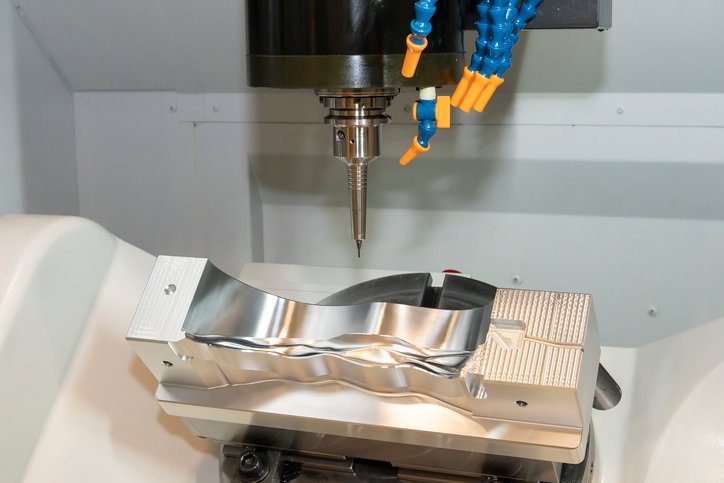
Our Capabilities
GPR Ltd operates high-performance 5 axis CNC milling centres capable of handling a broad spectrum of materials and component types:
- Materials: Aluminium, stainless steel, titanium, brass, copper, engineering plastics, and exotic alloys
- Component Types: Turbine blades, medical enclosures, sensor housings, instrumentation parts, mould tools
- Batch Sizes: Ideal for prototypes, one-offs, and small to medium production runs
- Software & Programming: Advanced CAM programming ensures optimal tool paths and cycle efficiency
With dual Matsuura MX-520 vertical 5 axis machining centres, we consistently deliver outstanding results on even the most challenging projects.
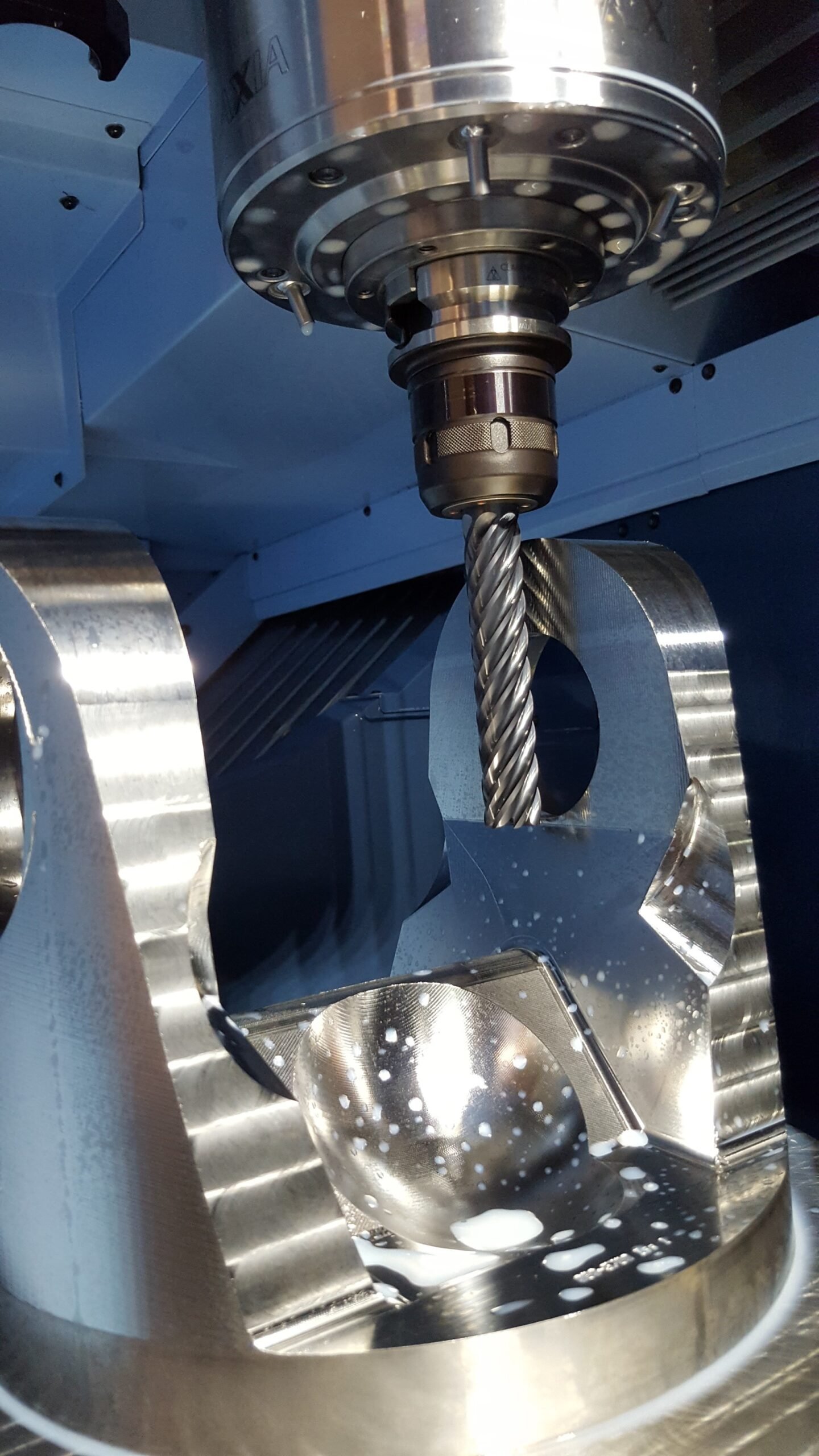
Why Choose GPR Ltd for 5 Axis Machining?
- Precision for Complex Components
Our machines and team are equipped to handle tight tolerances, smooth surface finishes, and complex contours—all with reduced fixture changeovers. - Reduced Setup Time
With 5 axis capability, many parts can be machined in one setup, saving time and eliminating stack-up errors common in traditional methods. - Time & Cost Efficiency
Fewer setups, faster cycle times, and reduced handling means lower total production costs and faster project completion. - Versatility Across Industries
From medical devices and aerospace to motorsport and advanced telecoms, our 5 axis machining supports diverse, high-tech manufacturing needs. - Certified Quality Assurance
Every component undergoes rigorous first-off and final inspection processes in line with our ISO 9001 certified quality management system.
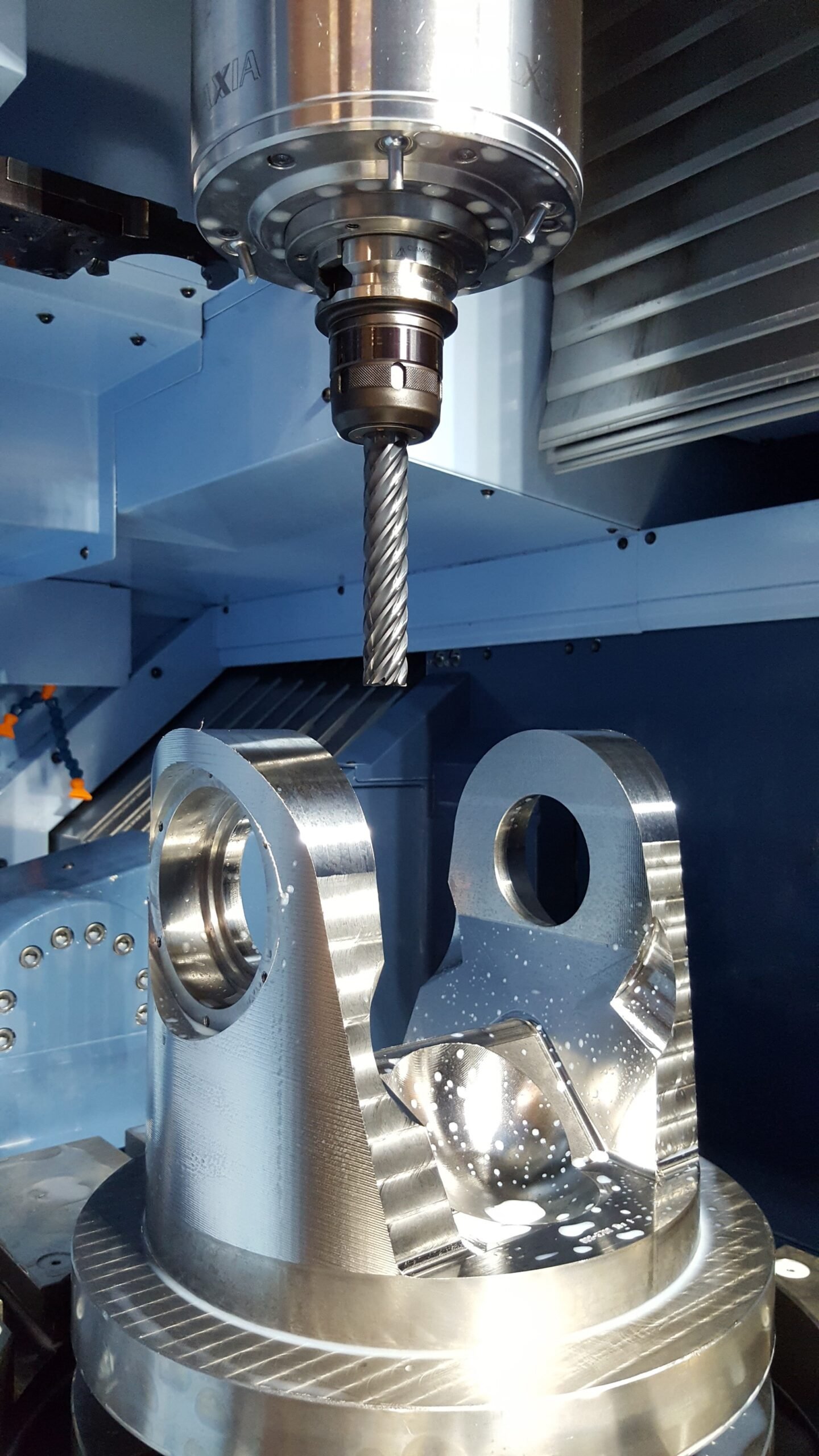
How It Works
01. Send Us Your CAD Model
We accept 3D CAD files in all standard formats. Our team reviews your geometry and confirms design-for-manufacture (DFM) feasibility.
02. CAM Programming
Our CAM programmers develop precise, optimised tool paths suited to 5 axis motion, reducing machining time while maintaining accuracy.
03. Machine Setup & Testing
Parts are fixtured for multi-angle machining. We run test cycles and inspect initial parts to confirm accuracy before scaling to full runs.
04. Full Production & Inspection
Parts are produced with continuous in-process checks. We use advanced metrology to verify conformance, including full traceability.
05. Delivery & Documentation
We provide fast turnaround on both prototypes and production parts, complete with inspection reports, material certs, and customer support.
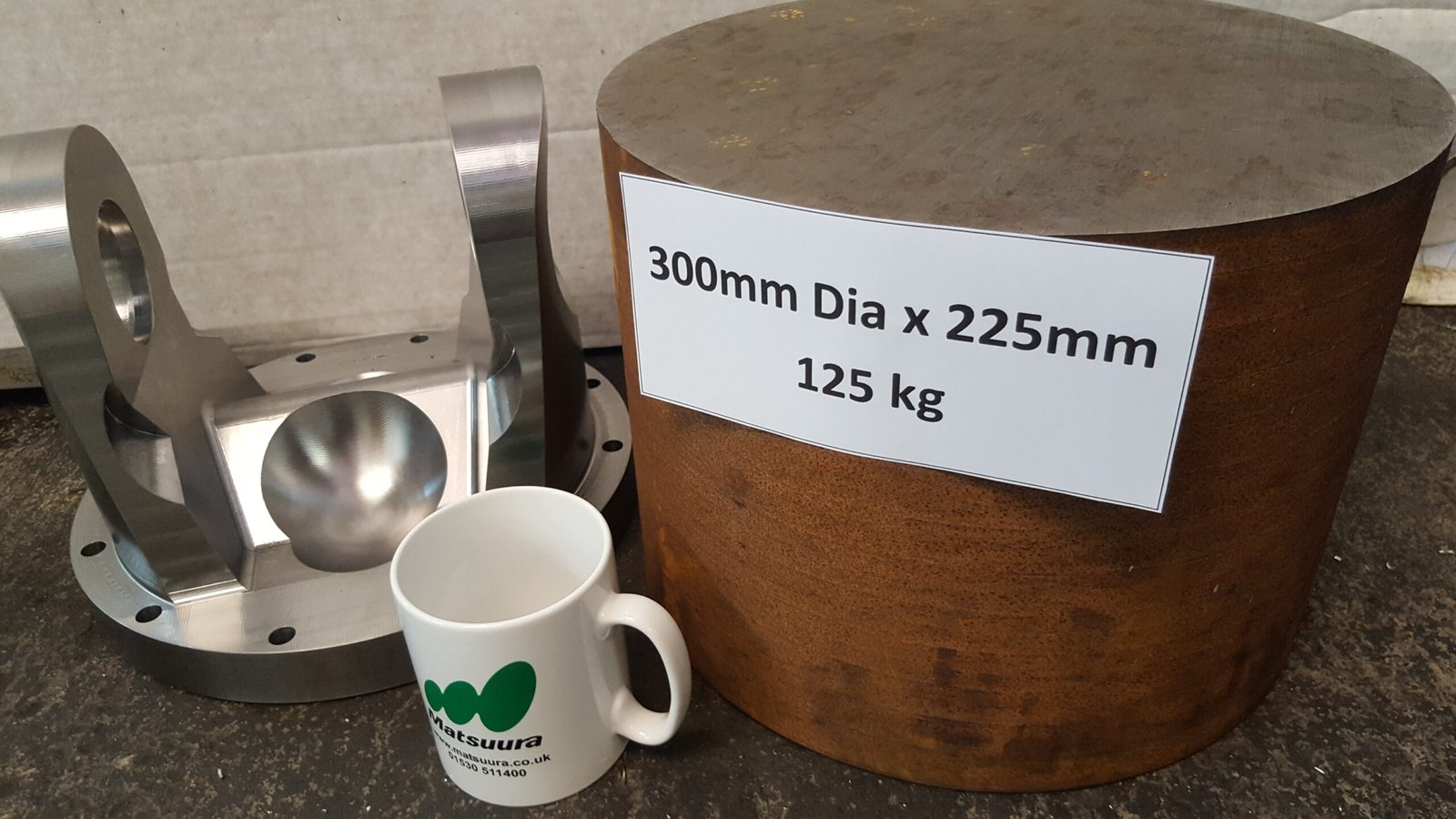
Industries Served
- Aerospace: Structural components, turbine housings, bracketry
- Medical: Precision surgical tools, enclosures, implants
- Motorsport: Suspension elements, brackets, custom engine components
- Telecoms: Enclosures, precision fittings, mounts
- Engineering: Custom machine parts, dies, fixtures, and tooling
Key Benefits of 5 Axis Machining
- Machining of parts with complex curves and angles
- Minimized part repositioning and increased first-pass accuracy
- Improved tool life and surface finish due to optimal cutting angles
- Freedom to design parts not possible with conventional CNC milling
- Faster lead times with reduced setup and rework